How Culture Shapes: A Series on National Culture and Its Influence on Risk Management
Why national culture matters in risk management and what this series is about
This is part 1 of How Culture Shapes: A 10-part series on national culture and its influence on risk management
I was ski guiding in Chile when the question first struck me.
We were sitting on a ridge, another guide and I, watching our clients ski below. They were local skiers, and they were experienced enough to be in this terrain.
We had done everything right. We had extensive safety briefings, careful skier assessments, and a progressive terrain plan for the day. And yet, there they were, recklessly charging through consequential avalanche terrain. They were ignoring the “fence” lines we'd set; their choices made zero sense to us.
We couldn't figure it out. We had communicated the risks clearly. They understood our English just fine; we had seen that throughout the day. They knew the mountains. But something deeper was driving their decisions, something we couldn't name or reach with our usual tools.
We wondered aloud to each other: was this a culture thing?
A few months later I went back to South Korea, where I was building an outdoor education program for an international school. The question stayed with me. Over the next several years, as I watched Korean students, parents, and government officials interact with a program designed by Californians, I became convinced that culture was playing a role in safety perceptions and behavior in ways none of us fully understood.
The question wouldn't leave me alone. Eventually, I went back to school to study it. I conducted original research and wrote a thesis on cultural risk. And now, more than a decade into this work, I see culture everywhere.
These insights have made me a better risk manager, both abroad and at home.
This series, How Culture Shapes, is about what I've learned.
What Is Culture?
Culture is the set of values, assumptions, beliefs, and behaviors shared by a group of people.
These traits develop over generations, often unconsciously, and they shape how people see the world and interact with each other. Culture is the water we swim in. Most of the time, like most fish, we don't notice it’s there at all.
One of the most widely used frameworks for understanding cultural differences comes from Geert Hofstede, a Dutch psychologist who studied IBM employees across dozens of countries in the 1960s and 70s (2001; 2011). He developed a set of dimensions that describe patterns in how different national cultures approach things like hierarchy, uncertainty, and competition. These dimensions have been applied extensively in management and safety research, including in aviation, where cultural factors have been studied for decades.
The dimensions aren't perfect. Critics point out that they can oversimplify, that globalization has blurred national boundaries, and that individuals within any culture vary widely. These critiques are fair. I find the dimensions most useful not as precise measurements, but as a way to see patterns I might otherwise miss. They help me notice when my assumptions aren't shared, and they give me language to talk about differences that are otherwise hard to name.
Throughout this series, I'll draw on Hofstede's dimensions, along with insights from safety science, aviation research, and my own experience working in Korea for nearly a decade.

Hofstede’s National Culture Dimensions. Adapted from “Culture’s Consequences: Comparing Values, Behaviors, Institutions, and Organizations Across Nations” (2nd ed.), 2001, Sage Publications. Copyright 2001 by Geert Hofstede. and “Dimensionalizing cultures: The Hofstede model in context,” by G. Hofstede, 2011, Online Readings in Psychology and Culture, 2(1). CC.
Culture and Risk: A Systems View
If there is one thing to know before diving in, it’s this:
National culture is associated with safety outcomes, but it is not directly causal. A person's cultural traits doesn't make them inherently safer or more dangerous. The relationship is more complicated than that.
Unfortunately, this nuance often gets lost. There's a popular narrative that frames certain cultures or cultural traits as inherently more risky. Korean pilots, the story goes, are dangerous because their culture discourages them from challenging authority (Gladwell, 2008). This framing is tempting because it offers a simple explanation for complex events. But it's also misleading. It crosses into what historian Yuval Harari calls "culturalism," a close cousin of racism that attributes failures to cultural factors rather than systems and design factors (Harari, 2015).
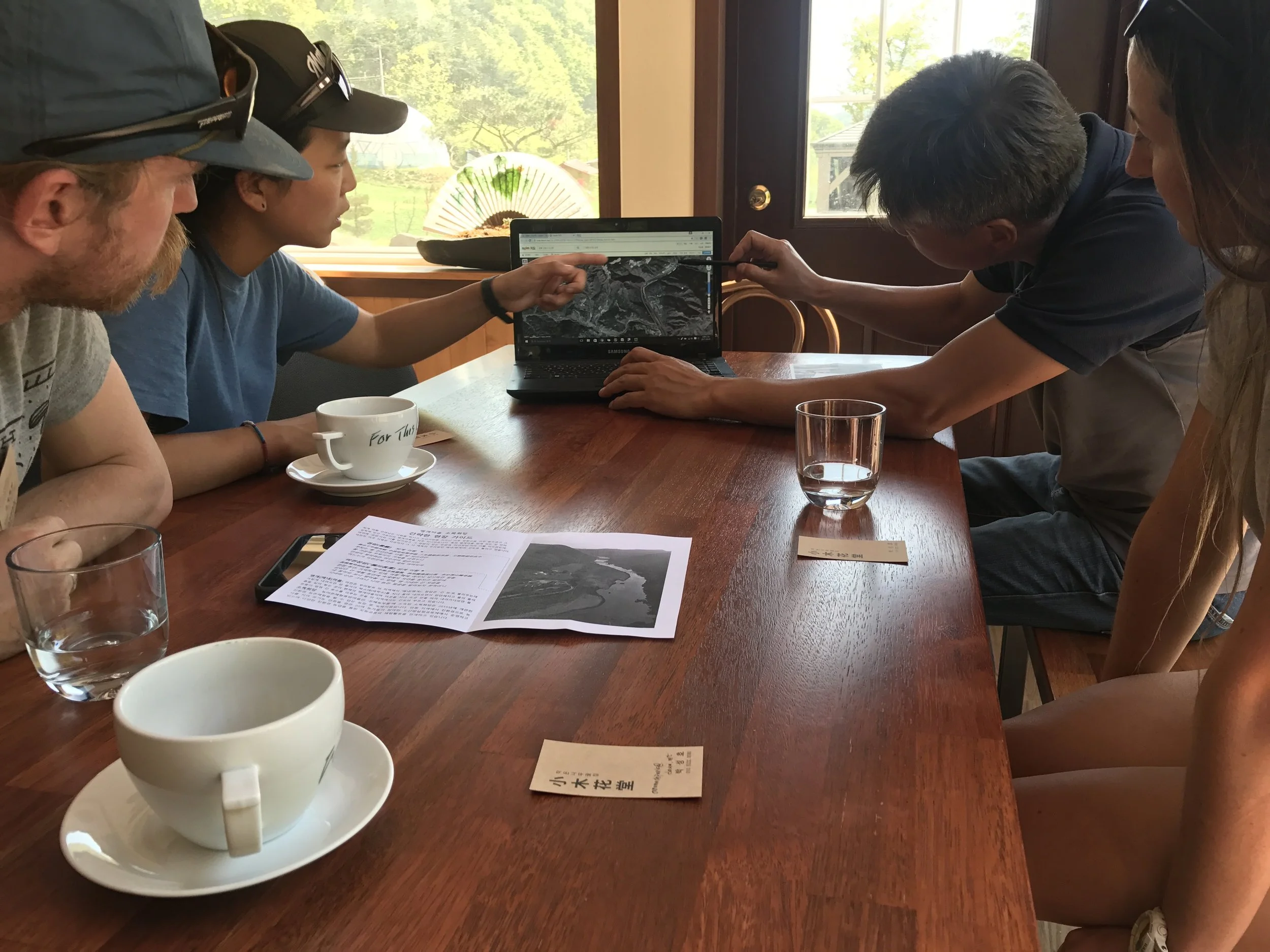
Talking to local landowners on a scouting trip
My own research and experience point to a different explanation. Culture becomes problematic not because of the traits themselves, but because of how those traits interact with features and design-logic of systems…systems designed by people with their own set of cultural traits and perceptions.
Risk management tools, training curricula, standard operating procedures, and even the physical design of aircraft cockpits all encode core beliefs based on a set of cultural assumptions. When the people using those systems hold different norms, values, and beliefs, gaps emerge. Miscommunication happens. Intentions get lost. Decisions that made perfect sense to the person making them look reckless or incomprehensible to someone watching with a different cultural lens.
This is what I call cultural risk.
Cultural risk emerges from the misalignment between the cultural assumptions built into a system and the cultural perceptions of the people working within it. It's not about whether a culture or a trait is good or bad. It's about whether the system accounts for the people actually using it.
In Korea, I saw examples of this constantly. Our program was designed in California, and we imported it, wholesale. The forms we used, the way we managed parent and student briefings, and the expectations we had for how students would speak up when something felt wrong… all of it assumed a cultural context that didn't exist in Korea.
Every year, we discovered another place where the mismatch was creating problems, and every year, we adapted. By the end, the program looked very different from where we started. People recognized it as something distinctive, as something shaped by the learning that happened when a Western model met a Korean context and had to change.
That process of learning is what this series is about.
What This Series Covers
Each post in this series examines a different way that culture shapes risk management in outdoor programming. The posts draw on safety science research, aviation case studies, and stories from my own work.
The first three posts examine specific cultural dimensions and their influence on safety:
Why "Speaking Up" Isn't Good Enough explores how power distance influences safety voice, and why encouraging people to speak up isn't enough if the environment doesn't support being heard.
Risk, Tolerance, and Who Gets to Decide looks at uncertainty avoidance and how it shapes decision-making, situational awareness, and the gap between policy designers' intent and staff interpretation.
Beyond the Bottom Line examines production pressure through the lens of cultural dimensions like masculinity and short-term orientation, and how these forces shape organizational priorities.
The next post applies these dimensions to a real incident:
Re-examining Mangatepopo returns to a well-known tragedy in outdoor education and considers how cultural factors may have contributed at multiple levels of the system.
Two posts examine the Western assumptions embedded in outdoor education itself:
Struggle as Proof questions the belief that challenge and adversity are necessary for growth, and explores alternative relationships with nature and learning.
Through the Struggle continues that examination, looking at how culture shapes approaches to trust, safety, and what programs are actually trying to achieve.
The final three posts look at practical applications and the path forward:
What Outdoor Programs Can Learn from Aviation examines how culture shapes policies, training curricula, and other task objects, drawing on the Asiana 214 incident.
What I Learned About Experiential Education in a Korean Mountain Village tells the story of an encounter that challenged my assumptions about what outdoor education even means.
One Way, Not The Way offers a framework for seeing cultural risk in programs and suggests where to begin.
An Enabler of ‘Good’ Risk Management
Program directors and risk managers in outdoor programming work hard to build systems that keep people safe. Policies, procedures, training programs, and safety briefings, they all represent an enormous investment of thought and care. But these practices and systems don't exist in a vacuum. They exist within cultural contexts that shape how people interpret instructions, voice concerns, make decisions, and relate to authority.
When those cultural contexts aren't recognized, even well-designed systems can fail in ways that are hard to predict and easy to misunderstand.
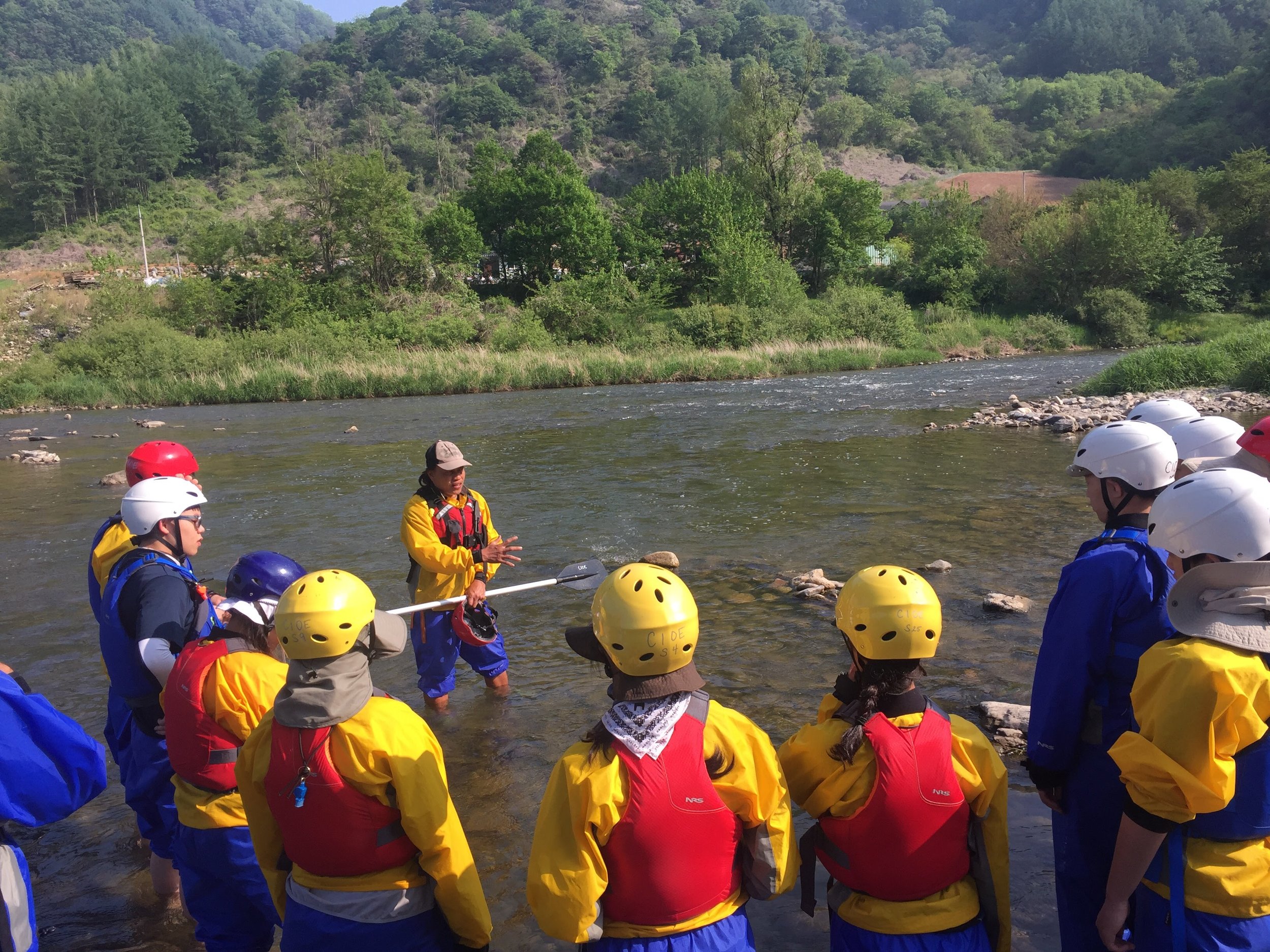
Safety briefing! Getting ready to paddle downstream.
The good news is that culture, once seen, can become an enabler instead of a barrier. It provides information that makes risk management more efficient and effective.
That's what I've learned over fifteen years of working in this space. I'm still learning. This series is an invitation to learn alongside me.
FAQ
Does national culture really affect safety outcomes?
Yes, and the evidence base goes beyond anecdotes. Research in aviation and healthcare links cultural dimensions like power distance to communication failures, and research in outdoor programs (Slay et al., 2025) shows culture embedded in policies, curricula, and forms, not just in interpersonal behavior.
What are Hofstede's cultural dimensions?
Geert Hofstede's framework describes national cultures along measurable dimensions, including power distance, uncertainty avoidance, individualism versus collectivism, masculinity versus femininity, and long-term versus short-term orientation. The framework has documented limitations, but it remains the most practical entry point for thinking about culture and risk.
How should an international program use this series?
Start with the dimension that matches your current friction. Staff not raising concerns points to power distance. Rigid rule-following or chaos around discretion points to uncertainty avoidance. Each post isolates one mechanism and ends with practical direction for program leaders.
References
Gladwell, M. (2008). Outliers: The story of success. Hachette UK.
Harari, Y. N. (2015). Sapiens: A brief history of humankind. Harper Collins.
Hofstede, G. (2001). Culture's consequences: Comparing values, behaviors, institutions, and organizations across nations(2nd ed.). Sage Publications.
Hofstede, G. (2011). Dimensionalizing cultures: The Hofstede model in context. Online Readings in Psychology and Culture, 2(1). https://doi.org/10.9707/2307-0919.1014
Hofstede, G., Hofstede, G. J., & Minkov, M. (2010). Cultures and organizations: Software of the mind (3rd ed.). McGraw-Hill.